
Plant
Spring
Light
Full sun
Soil
Well drained, rich not needed
Returns
Year after year
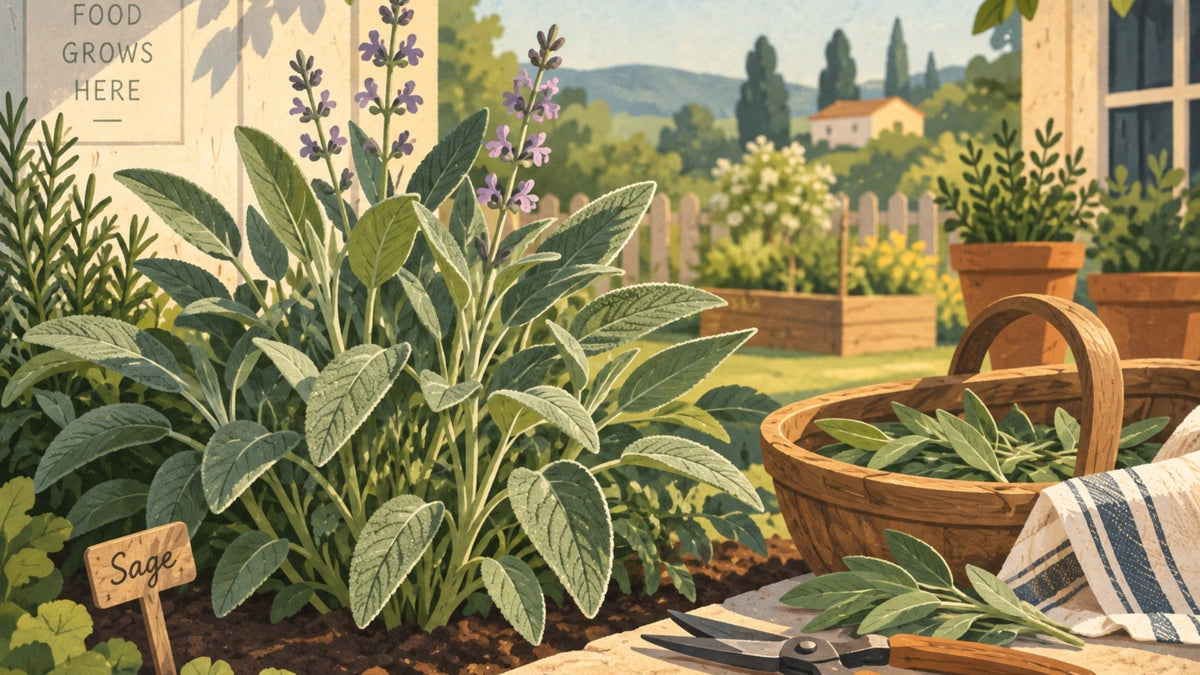
Sage earns its place in a garden through consistency. The plant handles dry spells, asks for little fertilizer, and returns year after year in the right conditions. A single plant can supply fresh leaves for the kitchen while adding soft, silvery color to a garden bed or container.
That combination makes sage especially useful for a small home garden. It does not need much space, and it rewards simple care with several seasons of growth.
One Plant, Many Seasons
Tap a stageSpring
Seed, nursery start, or cutting
Give it full sun and soil that drains well. Beds, raised beds, containers and window boxes all work.
First season
Little water, little fertilizer
Once established, sage handles dry spells better than many common herbs.
Summer
Purple spikes for pollinators
Bees and butterflies visit the flowers, and the aromatic leaves tend to discourage deer and rabbits.
After flowers fade
A light cut keeps its shape
Occasional pruning keeps the plant full and encourages fresh growth.
Year after year
Cut only what the recipe needs
Fresh leaves carry more fragrance and flavor than dried sage, and the established plant keeps producing.
Start Small and Let Sage Settle In
Sage does best in full sun and soil that drains well. Rich soil is not necessary. The plant can thrive in relatively poor soil as long as excess water has somewhere to go.
Spring offers a good time to start a plant from seed, a nursery start, or a cutting from an established plant. Sage also adapts well to raised beds, containers, and window boxes. That flexibility gives a small garden plenty of options.
A sunny pot on a patio can produce enough sage for regular home cooking without taking over the space. A plant in a garden bed can grow into a compact mound of soft, silvery-green leaves.
From Our Pinterest Board
 Common sage
 Tricolor sage
 Harvesting
Keep the Plant Productive with Simple Care
Once established, sage tolerates dry weather better than many common herbs. It does not need constant water or heavy fertilizer. That makes it a forgiving choice for a gardener who wants a dependable plant without a demanding care schedule.
Occasional pruning helps sage stay full and encourages fresh growth. A light trim after the flowers fade helps maintain the plant's shape.
Those flowers add another reason to leave room for sage. Purple flower spikes attract bees and butterflies. The aromatic foliage also tends to discourage deer and rabbits.
Sage has a reputation as a useful companion plant near crops such as cabbage, broccoli, and carrots because its strong scent may discourage some common garden pests. That role adds another layer of value to a plant already useful on its own.
Harvest One Plant for Years
Fresh sage carries a stronger fragrance and flavor than the dried herb from a jar. A plant close to the kitchen makes it easy to cut only the leaves a recipe needs.
A few leaves can season a brown butter sauce. A larger harvest can supply stuffing or other dishes that depend on sage's deep, savory flavor.
The plant also earns its space outside the kitchen. Its foliage adds texture through much of the year, and varieties such as purple sage, golden sage, and tricolor sage add ornamental color as well.
Getting Started With Sage
0 of 5 doneA single sage plant can become one of the most dependable parts of a home garden. It asks for little space and modest care, then returns fresh herbs, flowers, texture, and several seasons of use.
What We Used
The compact hand-tool set works well around herbs because a trowel, transplanter, and cultivator cover the basic jobs around a small sage plant without requiring full-size garden tools.
I like an herb kit as a simple entry point for a small kitchen garden. Sage fits that kind of setup because one established plant can continue to produce over several seasons.